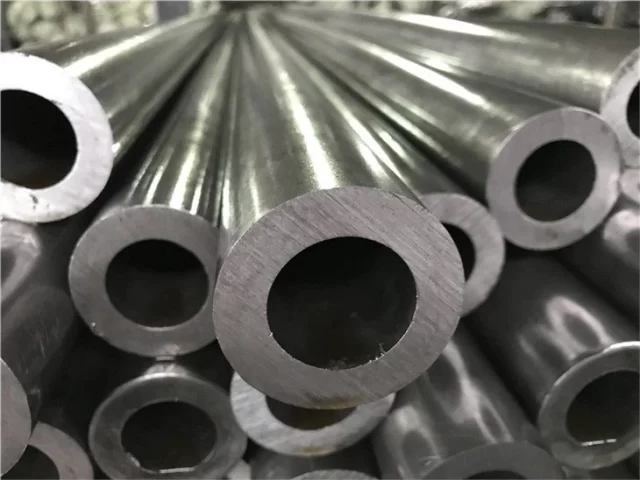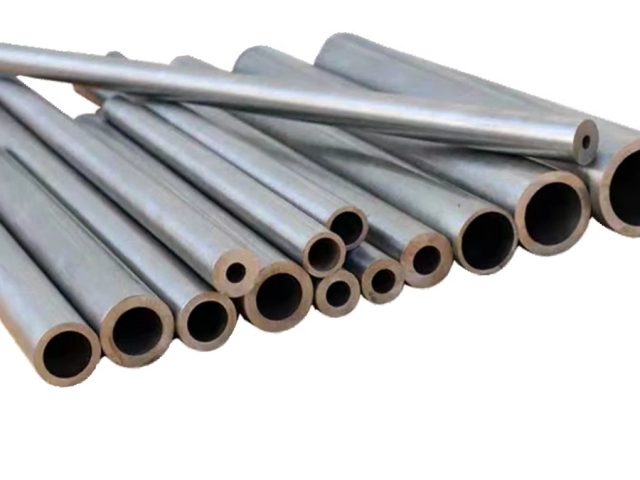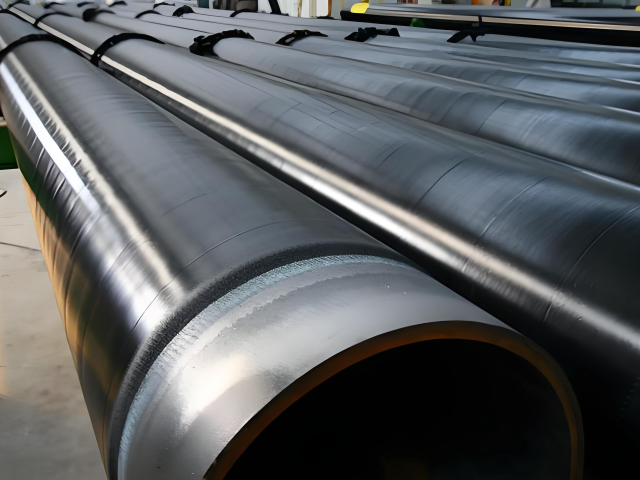
ASTM A311 Seamless pipe for Precision Mechanical
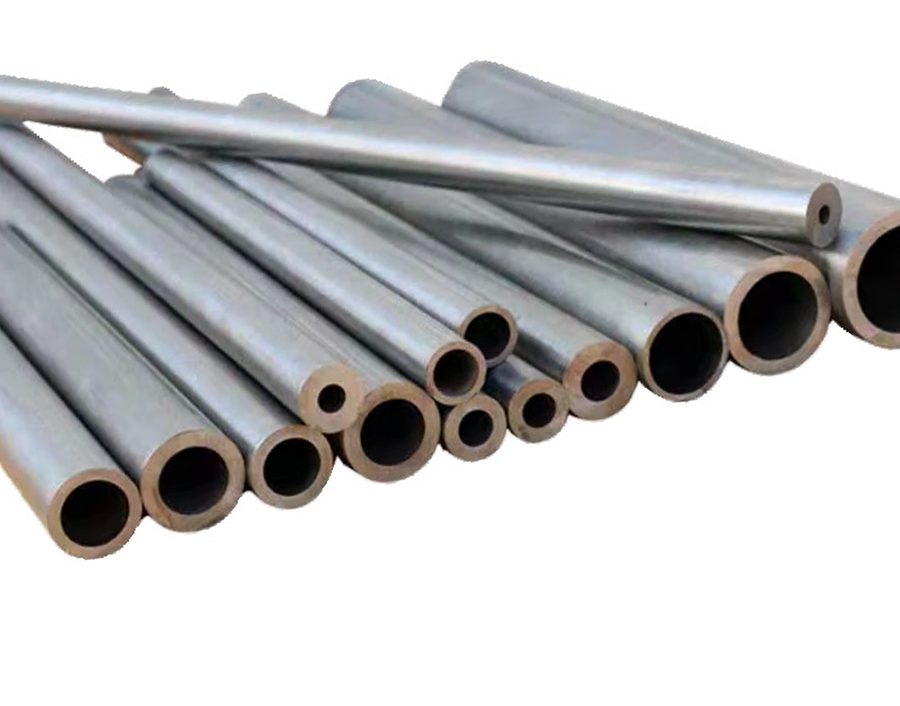
The Crucible of Stability: Abtersteel’s ASTM A311 Seamless Steel Pipeline for Precision Mechanical Applications
The foundational requirement of advanced mechanical engineering and high-integrity fluid power systems is not merely structural strength, but absolute, verifiable material stability and dimensional precision under extreme stress cycles. Abtersteel’s offering of the ASTM A311 Seamless Steel Pipeline is engineered specifically to meet this demanding criterion, occupying a highly specialized niche in the steel industry that transcends the commodity pipeline market. It is a product defined by its meticulous thermal treatment—specifically, the mandatory normalizing and tempering process—which imparts superior mechanical properties, excellent machinability, and, most critically, unparalleled dimensional stability for applications such as high-precision shafts, hydraulic cylinder components, and specialized structural members where residual stress must be minimized to zero. The inherent flawlessness of the seamless manufacturing process, combined with the predictable metallurgical refinement achieved through controlled heat treatment, elevates A311 into a solution of choice for engineers requiring materials that perform reliably under dynamic and highly constrained operating conditions, providing a level of predictability unattainable with as-rolled or conventionally welded alternatives.
1. The Precision Mandate: Defining ASTM A311 Seamless Integrity
The technical definition of ASTM A311 separates it immediately from general-purpose carbon steel pipe (like A53 or even some A106 grades). A311 is explicitly designated for use as machinery parts or other parts requiring enhanced tensile properties and improved machinability, necessitating a thermal processing step that is often optional or absent in standard line pipe. The seamless nature of the product is the first pillar of its integrity; seamless pipe, produced without a longitudinal weld, inherently offers uniform wall thickness, superior concentricity, and complete structural homogeneity around the circumference. This is crucial for applications where the pipe might be subjected to high internal or external pressure and rotational or oscillating forces, as the absence of a weld seam eliminates the structural discontinuity that is often the initiation point for fatigue failure or corrosion in welded pipe forms.
Seamless Integrity as the Baseline for Stability
The manufacturing process for seamless pipe—typically involving rotary piercing of a solid steel billet—fundamentally ensures that the final product possesses isotropic properties across its cross-section. This is a non-negotiable requirement for components that will undergo subsequent precision machining, such as honing the internal bore of a hydraulic cylinder or accurately cutting gear teeth onto an external surface. Any variation in material consistency, density, or grain structure (such as that found in the heat-affected zone of a weld) can lead to unpredictable deformation during machining, compromising the micro-tolerances required for sealing or smooth operation. The seamless integrity of Abtersteel’s A311 pipe provides the stable, clean canvas upon which subsequent precision engineering processes can be reliably performed, maximizing material yield and minimizing costly rejection rates associated with post-machining distortion.
The Grade A and Grade B Distinction
The A311 standard includes variations such as Grade A and Grade B, which, while sharing the fundamental thermal treatment requirements, often specify distinct tensile requirements or chemical limitations. The choice between these grades is a calibrated decision based on the application’s specific need for ultimate strength versus machinability and desired ductility. Abtersteel’s sourcing and inventory management are carefully aligned to ensure the precise grade—with its associated, certified mechanical properties—is supplied, guaranteeing that the material’s performance perfectly matches the engineering calculations for stress, deflection, and component life, removing any element of material uncertainty from the critical design process. The very existence of these defined grades within the A311 specification underscores its role as a specialized, engineered material, rather than a general-purpose conveyance element.
2. Metallurgy and Thermal Processing: The Role of Normalizing and Tempering
The true technical essence of ASTM A311 pipe lies not in its chemical composition alone, but in the sophisticated and mandatory heat treatment that follows the seamless forming and sizing operations. This is the stage where the material’s microstructure is purposefully refined to achieve the predictable, enhanced mechanical properties and exceptional stability required by the standard.
The Scientific Imperative of Normalizing
The first critical step is Normalizing. This process involves heating the steel pipe to a precise temperature above its upper critical transformation point ($Ac_3$)—typically in the range of $870^{\circ}\text{C}$ to $950^{\circ}\text{C}$—followed by cooling in still air. The purpose of normalizing is multi-fold:
-
Grain Refinement: Heating the steel past $Ac_3$ fully converts the microstructure to austenite, which, upon cooling, reforms into a finer, more uniform ferritic-pearlitic structure. This finer grain size directly improves the material’s toughness and yield strength compared to the often coarse, irregular structure of as-rolled steel.
-
Homogenization: It removes internal variations in the microstructure and chemistry that may have occurred during the initial billet casting or the subsequent hot piercing process, creating a consistent metallurgical baseline throughout the pipe wall.
-
Residual Stress Removal: Crucially, normalizing relieves the significant residual stresses locked into the material during the aggressive hot-working and cold-sizing phases of seamless manufacturing. The presence of residual stress can lead to unpredictable warping, cracking, or dimensional instability when the pipe is machined or subjected to high operating temperatures, rendering the material unsuitable for precision mechanical components.
Abtersteel’s thermal processing commitment ensures that the soak time and cooling rate during normalization are meticulously controlled, guaranteeing full transformation and maximum stress relief, thereby providing a physically and metallurgically stable platform for all subsequent operations.
Tempering: Calibrating Hardness and Ductility
Following normalization, the A311 pipe often undergoes Tempering. This secondary, lower-temperature heat treatment further fine-tunes the mechanical properties. Tempering involves reheating the normalized steel to a sub-critical temperature (below $Ac_1$), holding it, and then slowly cooling it.
The primary function of tempering is to reduce the material’s hardness and increase its ductility and fracture toughness while maintaining the high tensile strength achieved through normalization. This process adjusts the morphology of the carbide phases within the ferrite matrix, providing the optimal balance of strength and machinability. For machinery components, the ability to achieve high tensile strength without excessive hardness (often specified by a maximum Brinell Hardness number, such as the $\leq 200 \text{ HB}$ mentioned) is vital, as overly hard materials are difficult to machine, wear tools rapidly, and are susceptible to brittle failure. The controlled combination of normalizing and tempering is the technical signature of A311, transforming a standard carbon steel into a precision engineering material with verifiable, balanced mechanical performance.
3. Manufacturing Excellence: Seamless Processing and Dimensional Control
Beyond the heat treatment, the physical manufacturing tolerances required for A311 applications necessitate an extremely high degree of dimensional control inherent in the seamless production process, often followed by dedicated cold-finishing steps.
Wall Thickness Uniformity and Concentricity
In precision applications like hydraulic cylinders or precision rolling elements, the uniformity of the wall thickness and the concentricity of the bore relative to the outer diameter are paramount. Any significant deviation compromises the sealing surface, leads to uneven wear, or introduces destructive vibrational modes during high-speed rotation. The seamless rotary piercing method, followed by precise sizing, ensures superior concentricity compared to welded pipe, where variations in the strip thickness or the welding process can affect the dimensional accuracy. Abtersteel’s seamless lines are equipped with continuous, non-contact measurement systems (e.g., ultrasonic gauges) that monitor wall thickness and diameter in real time, ensuring the final product consistently adheres to the tightest tolerances, which are often stricter than those published for commodity seamless pipe standards.
Cold Drawing for Enhanced Surface Finish and Tolerance
To achieve the exceptionally tight dimensional tolerances and superior internal surface finish required for many A311 mechanical applications, the heat-treated pipe often undergoes a final cold drawing or cold pilgering step. Cold drawing involves pulling the pipe through a die over a mandrel, reducing both the outer diameter and wall thickness. This process refines the dimensional accuracy, improves the surface finish, and further enhances the mechanical properties (though any additional cold work must be accounted for if the final state is still specified as Normalized and Tempered). This focused cold finishing is the step that guarantees the internal bore and external surface geometry are optimized for subsequent honing, machining, or precision fitting into an assembly. The A311 material, having been normalized and tempered, is ideally conditioned to handle this cold-forming step without cracking or developing excessive internal stress, unlike non-heat-treated steels.
4. Quality Assurance, Application Versatility, and Life-Cycle Stability
The integrity of Abtersteel’s ASTM A311 pipe is backed by a rigorous, multi-stage Quality Assurance (QA) protocol designed to verify both the material’s chemical/mechanical integrity and its dimensional accuracy before it is released for critical service.
Verifying Integrity: Nondestructive and Mechanical Testing
Every batch of A311 material undergoes mandatory testing to confirm compliance with the specified composition and the effects of the thermal treatment:
-
Chemical Analysis: Confirmation of the chemical composition (C, Mn, Si, P, S) provided by the user is verified to ensure the material falls within the narrow ranges that guarantee the desired response to normalizing and tempering.
-
Tensile Testing: Destructive tests are performed to confirm that the material meets the specified minimum yield strength ($\geq 250 \text{ MPa}$) and tensile strength ($\geq 450 \text{ MPa}$), verifying the efficacy of the heat treatment process in achieving the enhanced properties.
-
Hardness Testing: The non-destructive Brinell Hardness test is crucial to ensure the pipe has not exceeded the maximum hardness threshold ($\leq 200 \text{ HB}$), confirming suitable machinability and resistance to brittle failure.
-
Non-Destructive Testing (NDT): Ultrasonic Testing (UT) or Eddy Current Testing (ET) is often applied to the entire length of the seamless pipe to ensure the absence of internal or external flaws, laminations, or discontinuities that could compromise the component during high-stress operation.
Application Versatility: The Result of Stability
The combination of high strength, low residual stress, and precision tolerance allows Abtersteel’s A311 pipe to be deployed across a diverse range of demanding applications:
-
Hydraulic and Pneumatic Cylinders: The low residual stress and fine internal surface are ideal for cylinder bodies, where any instability could lead to seal failure or catastrophic buckling.
-
Precision Shafts and Axles: The high yield strength and dimensional stability make it suitable for transmitting torque and handling complex bending moments.
-
High-Pressure Fluid Power Components: For specialized fittings and small bore pipelines operating under extreme internal pressure where the uniformity and flawlessness of the seamless structure are non-negotiable safety requirements.
| Technical Aspect | Detail/Requirement |
| Material | Carbon Steel, Normalized and Tempered |
| Product Form | Seamless Steel Pipe |
| Standard | ASTM A311 (Latest Edition) |
| Purpose | Precision Mechanical Parts, High-Strength Applications |
| Steel Grade | A311 Grade A, A311 Grade B |
| Finishing | Hot-Finished or Cold-Drawn/Sized |
| Specification | ASTM A311 Seamless Pipe |
| Manufacturing Method | Seamless (Rotary Piercing, Extrusion, followed by Sizing/Drawing) |
| Surface Finish | Smooth, suitable for further machining/honing |
| Testing | Tensile, Hardness (Brinell), and often NDT (UT/ET) |
| Dimension Range (Typical) | Outer Diameter: $1 \text{ in}$ to $12 \text{ in}$ (Varies based on mill capacity and drawing limits) |
| Chemical Composition (Maximum Weight %) – Reference Data | Requirement (Typical) |
| Carbon (C) | $0.20 – 0.25$ |
| Manganese (Mn) | $0.60 – 0.90$ |
| Phosphorus (P) | $\leq 0.040$ |
| Sulfur (S) | $\leq 0.050$ |
| Silicon (Si) | $0.10 – 0.40$ |
| Chromium (Cr) | $\leq 0.25$ |
| Nickel (Ni) | $\leq 0.25$ |
| Mechanical Properties – Reference Data | Requirement (Minimum) |
| Yield Strength ($\text{R}_{\text{eH}}$) | $250 \text{ MPa}$ ($36,000 \text{ psi}$) |
| Tensile Strength ($\text{R}_{\text{m}}$) | $450 \text{ MPa}$ ($65,000 \text{ psi}$) |
| Elongation (A) | $20\%$ |
| Hardness (Brinell) | $\leq 200 \text{ HB}$ (Maximum) |
| Heat Treatment Requirements | Details |
| Process 1 | Normalizing (Heating above $Ac_3$ and cooling in still air) |
| Process 2 | Tempering (Reheating to sub-critical temperature) |
| Purpose | Relieve residual stress, refine grain structure, adjust hardness/ductility |
| Mandatory Status | Mandatory part of the A311 specification |
| Tolerance of Thickness Schedules (Seamless Pipe) | Tolerance Range (Varies by OD/WT Ratio) |
| Wall Thickness (t) | $\pm 12.5\%$ of $\text{t}$ (Often tighter tolerances achieved via cold drawing) |
| Outer Diameter (OD) | Varies by OD; often within $\pm 0.4\%$ to $\pm 0.75\%$ of OD |
| Straightness | Highly controlled for machining applications (e.g., $1/8 \text{ in}$ in $4 \text{ft}$) |
| Note | Abtersteel often supplies A311 pipe to enhanced tolerances surpassing the minimum standard. |