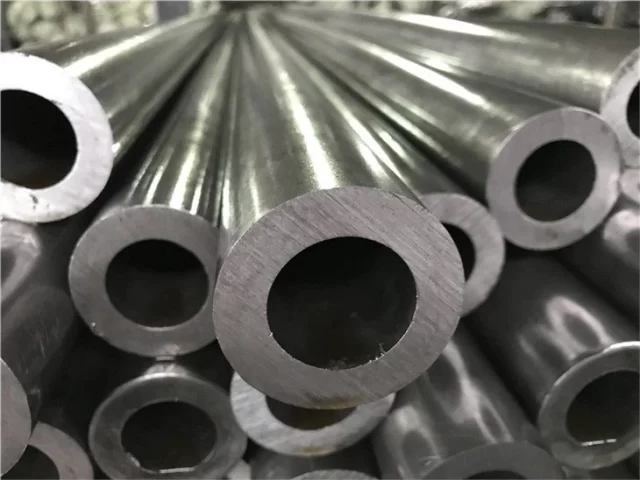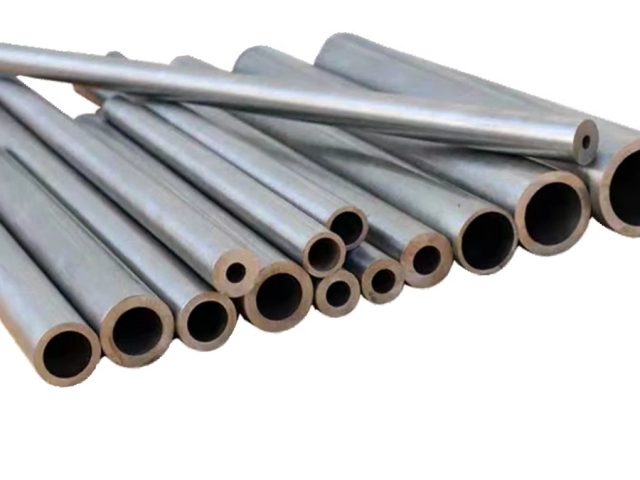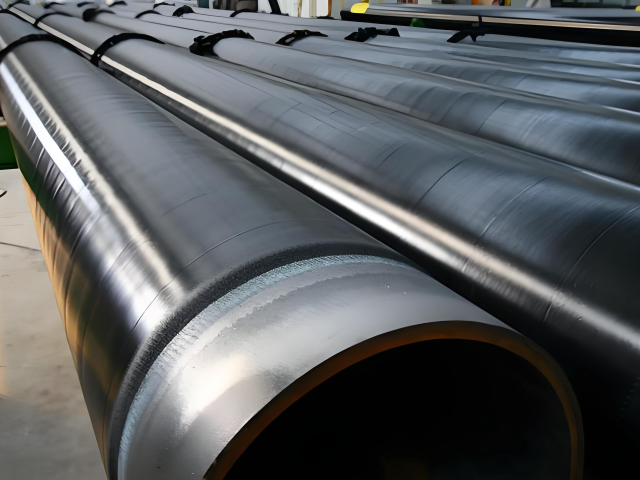
How to Weld A335 P91 to TP304H Without Cracking
Joining the Unlikely Pair: My Bitter Lessons Welding P91 to 304H Stainless
You ever try to weld two materials that, metallurgically speaking, absolutely hate each other? That’s what we do for a living. My name’s not important, but I’ve been swinging a stinger and signing off on X-rays for pushing thirty years now. Boiler tubes, superheater headers, main steam piping—you name it, I’ve probably burned rod on it, or watched someone else’s weld fail because they didn’t listen.
This story, the one about welding A335-P91 chrome-moly steel to TP304H stainless steel? That’s a story written in sweat, a few failures, and one particular night shift in a Louisiana power plant that I still dream about sometimes. Cold sweats, you know?
We’re talking about a Dissimilar Metal Weld, or DMW. It sounds clinical. In reality, it’s like marrying a diesel engine to a jet turbine and expecting the coupling to last forty years. P91 is your high-strength, creep-resistant warrior for high pressure. 304H is your oxidation-resistant, stainless prima donna for high temperature. They serve different purposes. But sometimes, in the real world of retrofit and repair, they have to become one.
First, The Players: Why They Don’t Play Nice
Let’s get the basics down, from my greasy field notebook, not a textbook.
A335-P91 is a martensitic steel. 9% Chromium, 1% Molybdenum, with a sprinkle of Vanadium and Niobium. We love it because it has monster strength at high temperatures—up to 600°C or so. The “H” in 304H just means it’s a high-carbon version of the standard 18-8 stainless, which gives it better creep strength. It’s fully austenitic, all face-centered cubic crystals.
Right off the bat, the problems are staring you in the face:
-
Thermal Expansion Mismatch: This is the big one. P91 has a coefficient of thermal expansion around 13-14 x 10⁻⁶ /°C. 304H? More like 18-19 x 10⁻⁶ /°C. So you heat this pipe up to operating temperature, say 570°C. The stainless side wants to grow almost 30% more than the P91 side. That differential tries to tear the weld apart right at the fusion line. It sets up cyclic strains every time the plant starts up and shuts down. We call that low-cycle thermal fatigue.
-
Carbon Migration: At welding temperatures, and even at service temperatures, carbon is a migratory bird. It loves to fly from where there’s a lot of it (the P91, which has a decent carbon content) to where there’s a strong attraction (the 304H, which has lots of chromium). Chromium is a carbide former. So the carbon packs its bags, moves across the weld, and forms a continuous band of chromium carbides right on the stainless side of the fusion line. That band is brittle as glass. We call it the “decarburized zone” on the P91 side and the “carburized zone” on the stainless side. It’s a fracture waiting to happen. I’ve seen it. It’s not pretty.
-
Oxidation Differences: P91 relies on forming a chromium oxide layer too, but it’s thinner. At high temps, if you don’t get the weld profile just right, the P91 side can oxidize preferentially right next to the stainless, creating a notch.
-
Post Weld Heat Treatment (PWHT) Nightmare: P91 requires PWHT to temper the hard, brittle martensite that forms when it cools down. You have to heat that whole area to about 760°C for a couple of hours. But 304H? When you hold it at 760°C, bad things happen. Chromium carbides precipitate within the grains and at the grain boundaries—that’s sensitization. It robs the stainless of its corrosion resistance and makes it susceptible to a nasty failure called “knife-line attack” later on. So you’re stuck: heat treat to save the P91, and you damage the 304H. Don’t heat treat, and the P91 weld is hard and brittle and will crack in service. Damned if you do, damned if you don’t.
The Louisiana Story: A Failure That Taught Me More Than Any Seminar
This was back in, I think, 2007. A big cogeneration plant outside Baton Rouge. They had a superheater outlet header, P91 material, and they were tying in a new replacement section of 304H pipe. It was a retrofit, a field weld. The engineering firm, some fancy outfit from up North, had specified a standard 309L stainless filler metal. That’s the usual “go-to” for joining stainless to carbon or low-alloy steel. 309L has higher alloy content to handle the dilution.
The night shift crew, good guys, they welded it up. Followed the procedure to the letter, or so they thought. The weld looked beautiful. Gorgeous caps. They did the PWHT, heating the whole weld and the P91 side for two hours. X-ray came back perfect. No slag, no porosity. Everyone high-fived.
Six months later, I get a frantic call. The unit was down. A leak. I drove down there, and my heart sank when I saw it. The weld hadn’t failed in the middle. It had failed right at the fusion line on the P91 side. A clean, circumferential crack, like someone had taken a knife and sliced the pipe right next to the weld. It wasn’t a ductile tear. It was brittle. You could see the crack ran right through that decarburized zone I was talking about.
What went wrong? The 309L filler, at that PWHT temperature, acted like a carbon magnet. It sucked carbon right out of the P91, leaving that weak, ferritic zone. The 309L itself, after being held at 760°C, probably wasn’t in great shape either. But the root cause? The wrong filler metal for a high-temperature, cyclic service. 309L is fine for static, lower-temperature stuff. Not here. We needed a nickel-based filler.
We ended up cutting out that entire spool piece. A $50,000 mistake in material and labor, not to mention the lost generation revenue. The plant manager, a guy named Mike, he didn’t yell. He just looked at me and said, “Fix it. And make sure it’s the last time.” I still remember that look.
The Fix: The Nickel-Based Solution and the Real Procedure
That failure burned the lesson into my brain. For P91 to 304H, especially in high-temperature cyclic service (which is 99% of the time), you use a nickel-based filler. Period. The industry standard now, and what we used for the re-do, is ERNiCr-3 (like Inconel 82) for TIG root and hot pass, and ENiCrFe-3 (like Inconel 182) for stick electrode welding.
Why nickel? Because nickel has a coefficient of thermal expansion that sits right in the middle between P91 and 304H. It acts as a buffer. More importantly, nickel doesn’t have a high affinity for carbon. It doesn’t form stable carbides the way chromium does. So that carbon migration problem? It doesn’t stop completely—physics is physics—but the nickel-based filler doesn’t create that sharp, continuous band of carbides. The carbon gradient is much gentler.
Here’s the real procedure, the one we wrote in blood after that Louisiana job:
Step 1: Preparation is Everything
You can’t just bevel and weld. The bevel is a compound bevel, usually around a 20-degree included angle, with a landing of about 1.5mm. But the key is cleanliness. Stainless is picky. P91 is picky. You have to grind with dedicated stainless-steel wheels. If you use a wheel that’s touched carbon steel, you’ll embed iron particles into the stainless bevel. Those particles become initiation sites for cracking later. I’ve seen it. We had a fitter once, good man, but he grabbed the wrong grinder. We made him re-bevel the whole pipe. He was pissed, but I’d rather have him pissed than a failed weld.
Step 2: The Buttering Layer (The Secret Sauce)
This is where experience beats a textbook. Instead of trying to weld the P91 directly to the 304H in one go, we “butter” the P91 bevel face first. We take the ERNiCr-3 TIG rod and lay down a layer, maybe 3mm thick, directly onto the prepared P91 bevel. This is done before the pipe is even tacked up.
Why butter? Several reasons.
-
First, it allows us to do a “intermediate” PWHT. After buttering, we put the P91 pipe section (just that end) into a local heating oven or use ceramic pad heaters and perform a full PWHT cycle at 760°C. This tempers the heat-affected zone in the P91 from the buttering pass, and it stress-relieves the butter layer. Crucially, because the butter layer is thin and the 304H isn’t attached yet, we’re not holding a massive amount of stainless at that sensitizing temperature. We’re just treating the P91 side.
- Second, it creates a graded interface. The first butter pass fuses with the P91, creating a thin dilution zone. Then that butter layer is heat-treated. When we later weld the buttered P91 to the 304H using the same nickel rod, the weld metal is essentially all nickel-based. The carbon migration is minimized.
Step 3: The Welding Parameters
We ran the re-do weld with TIG for the root and the next two passes. Pure argon purge on the inside. You have to purge stainless, otherwise the inside sugars up (oxidizes) and creates scale that can break off and ruin turbine blades later.
Here’s a rough table from that job, scratched on a piece of paper and later entered into the WPS:
| Parameter | Root Pass (TIG) | Hot Pass (TIG) | Fill/Cap (SMAW) |
|---|---|---|---|
| Filler Metal | ERNiCr-3 (2.4mm) | ERNiCr-3 (2.4mm) | ENiCrFe-3 (3.2mm / 4.0mm) |
| Polarity | DCEN | DCEN | DCEP |
| Current (Amps) | 90-110 | 110-130 | 90-110 (3.2mm) / 130-150 (4.0mm) |
| Voltage (Volts) | 10-12 | 11-13 | 22-24 |
| Travel Speed (mm/min) | 50-70 | 60-80 | 150-200 |
| Interpass Temp (°C) | Max 150 | Max 150 | Max 150 |
| Heat Input (kJ/mm) | < 1.5 | < 1.5 | < 1.5 |
We watch that interpass temperature like a hawk. If it gets too high, you’re basically preheating the whole mass too much, which increases the risk of hot cracking in the nickel alloy and promotes more carbon migration. We let it cool down to below 100°C sometimes before starting the next pass. Slow and steady.
Step 4: The PWHT Dilemma (Again)
After the weld is complete, we have a joint with buttered P91, a pure nickel weld metal center, and the 304H. Do we heat treat the whole thing again? The modern approach, and what we did, is a “compromise” or “tempering” PWHT. We heat the entire weld and a band on either side to a temperature lower than the standard P91 temper, around 720-740°C, for a shorter time, say one hour. This provides some tempering to any fresh martensite that might have formed in the P91 HAZ from the final welding passes, but it minimizes the time the 304H spends in the sensitization range. It’s not perfect. The 304H will still be somewhat sensitized right next to the weld. But it’s the best we can do. Some specs now even say no PWHT for these joints if you butter and control heat input strictly, but I’m old school. I like the tempering soak.
What the Codes and New Trends Say
Codes like ASME Section IX are the rulebook. They require you to qualify a Procedure Qualification Record (PQR) with tensile and bend tests, and for these materials, often Charpy impact testing on the P91 HAZ. You have to prove your procedure works.
The big trend now, and I’ve seen this in some new gas plants in Texas, is using automated orbital TIG welding for these critical DMWs. The machine controls the heat input and travel speed perfectly, way better than a human hand. It reduces variability. We used orbital for a job in Houston last year, joining P91 to 304H on a hydrogen reformer. The consistency of the bead was something else. But even then, the fundamentals—the buttering, the filler metal choice, the PWHT—they don’t change. The machine is just a tool.
Another thing popping up is the use of “compositionally graded” wire, but that’s mostly still in labs. Too expensive for field work right now.
Lessons You Can’t Learn in a Classroom
So, what’s the takeaway from all this, from the Louisiana failure and the jobs since?
First, that initial failure wasn’t really a welding failure. It was a materials engineering failure. Someone picked a filler metal that looked right on paper but was wrong for the real-world conditions of thermal cycling and PWHT. We get too comfortable with “standard practice.”
Second, you cannot defeat metallurgy. You can only manage it. You can’t stop carbon from wanting to move, but you can choose a filler metal (nickel) that doesn’t create a sharp carbide band. You can’t make the expansion coefficients match perfectly, but you can create a buffer zone with nickel that has a coefficient in between. You manage the risks. You don’t eliminate them. Anyone who tells you they have a perfect weld that will last forever is either lying or hasn’t been doing this long enough to see what happens after ten years and a thousand thermal cycles.
Third, I’ve learned to trust the visual inspection more than the X-ray sometimes. On that Louisiana weld, the X-ray was perfect. But a really sharp-eyed inspector with a good borescope might have seen some slight discoloration right at the fusion line, or a change in the oxide scale pattern, that hinted at something wrong underneath. Now, I spend a lot of time just looking at welds before and after heat treatment. You can almost feel the stress in the metal sometimes.
We put that re-do weld in service in late 2007. I checked on it a few years ago, during a planned outage. I climbed up to that header, ran my hand over the weld cap. It was still there. Still solid. A little discoloration, maybe, but no cracks. That feeling, that’s what you work for. It’s not the pay. It’s knowing that you took a mistake, a failure, and you fixed it with your own two hands and your brain, and that it’s holding back 2000 psi of superheated steam at 1000 degrees. That’s the job. It’s a hell of a thing.